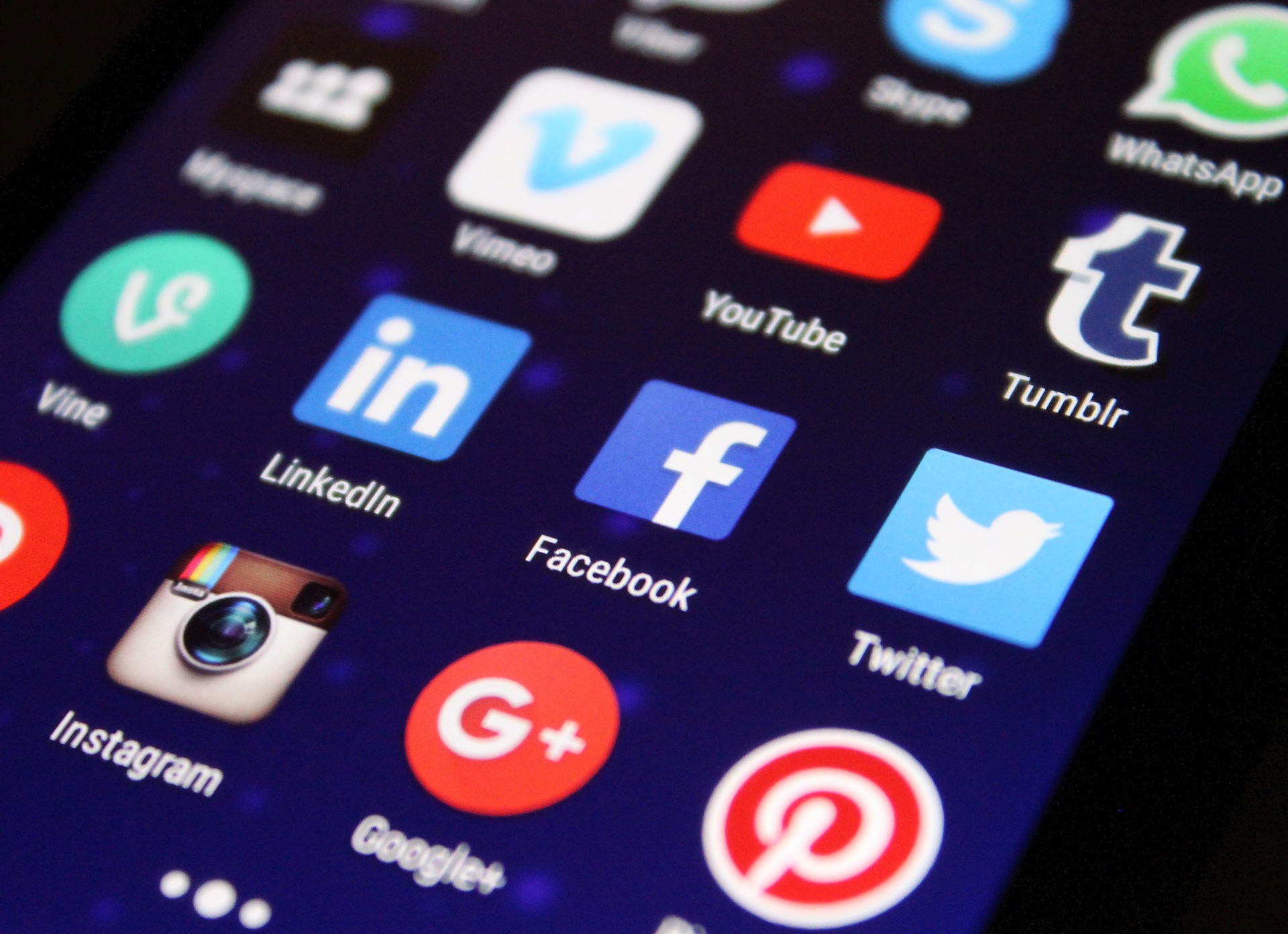
 Using social media is vital to businesses that use digital marketing. It has been a perfect tool to communicate with customers, to reach target market, get brand exposure, to reduce the cost of traditional marketing, and to drive traffic to the business’ website if it has one. However, there are a lot of social media platforms available in the wild. And each have different users in terms of ages, genders, interests, and locations.
Social media platforms have diversity. Each has a dominating group of users. Because of that, choosing the right social media platform for your business should be something to think about. Below are the differences of major social media platforms that are available today.
No doubt, this is the biggest social media platform today. With over 2 billion users, Facebook managed to lure businesses to sign up.
Facebook in general doesn’t have specific target users. In fact, all people that are at least 13 years old, regardless of what demographic they belong or classification, are welcome to sign up on the platform. Because of that, Facebook provides tools for businesses to help them targeting audience and execute social media marketing. For advertisements, it can be done using the Facebook’s Ad Manager. For organic promotions, it can be done by simply posting contents that simply target a specific group.
On the other hand, take note, Facebook is getting old. And according to statistics, younger users have been leaving the platform, which makes it having older users as the most active group.
A social media platform owned by Facebook. It is dubbed as the current trending platform as it has younger users with ages at least 13 years old to early 30’s as the dominant group.
Unlike Facebook where you can post a simple text, Instagram requires you to post something with a photo. This forces brands to be competitive in content marketing as they have to showcase aesthetic photos to engage and gain followers. If your business has a visually presentable product such as food, clothes, shoes, etc.; then Instagram is the perfect platform for you.
Aside from a profile full of creative photos, you can also utilize Instagram Stories, a feature that allows users to upload a set of photos or videos that will disappear within 24 hours.
YouTube
Owned by Alphabet, Inc., the parent company of Google; YouTube is the biggest social media platform that focuses in video sharing. It has an over billion users that upload millions of videos everyday. If your social media plan involves showcasing videos or creative motion graphics, then this platform might be the best choice for you.
Dubbed as a professional social media platform, LinkedIn has been created for professionals regardless of what age bracket they belong.
At LinkedIn, you can post plain text, photo, video, and links. That makes it partly similar to Facebook and Twitter. However, the platform offers a way for company recruiters to find new hires or candidates for a job position. Because of that, LinkedIn is not just a social media platform, it is a hybrid job portal, which makes it unique compared to the two.
On the other hand, LinkedIn’s parent company is Microsoft after the latter purchased it in 2016.
It’s the platform that has been dubbed as “trends generator” as most people use it to gather news and real-time information. Twitter is where people can post “tweets” that can be in a form of a simple text (limited to 280 characters), photos, gif, videos, polls, and links. Like other social media platforms, messaging feature is also present.
Twitter is the most similar platform to Facebook. It’s also not targeting a specific group of users. However, since its launching in 2006, Twitter is notably appealing to the users with ages 30 and below. If you want an alternative to Facebook, then this is the right platform for your brand.
To wrap up, all social media platforms have distinguishing traits that makes the social media industry colorful. Above is just subjective list of my favorite platforms, which may not suit your brand. At the end, all you have to do is study carefully the needs of your target market. By that, you will know the perfect platforms for your business.